Read Our Reviews


CALL
(480) 939-5818 | Home | | | | | | | Smile Gallery | | | | | Reviews | | | Blog | | | Contact Us |
| Home | | | | | | | Smile Gallery | | | | | Reviews | | | Blog | | | Contact Us |
Dental X-Rays
Mesa, AZ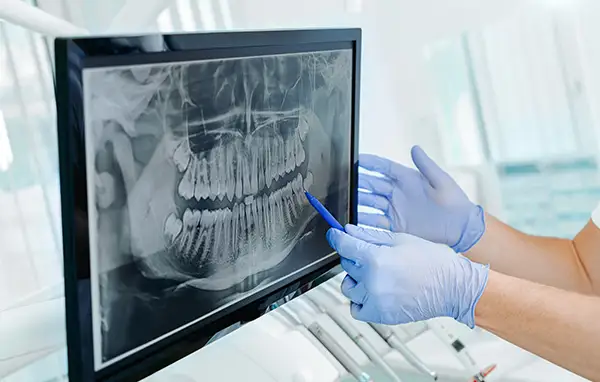 Dental X-rays provide essential diagnostic information that cannot be obtained through a visual examination alone. Without this imaging technology, many dental problems would go undetected until they become more serious and difficult to treat. At Timothy H. Kindt, DDS, our dentist uses the latest X-ray technology to ensure comprehensive evaluation of your oral health. This diagnostic tool allows us to identify issues early and provide you with the most effective treatment options for maintaining a healthy smile. Dental X-rays provide essential diagnostic information that cannot be obtained through a visual examination alone. Without this imaging technology, many dental problems would go undetected until they become more serious and difficult to treat. At Timothy H. Kindt, DDS, our dentist uses the latest X-ray technology to ensure comprehensive evaluation of your oral health. This diagnostic tool allows us to identify issues early and provide you with the most effective treatment options for maintaining a healthy smile.Understanding Dental X-RaysA dental X-ray is a diagnostic image that captures your teeth, bone structure, and surrounding tissues beneath the gum line. These images reveal details that are not visible during a standard clinical examination, including the areas between teeth, below the gums, and within the bone. This technology enables our dentist to diagnose cavities, assess bone health, evaluate tooth roots, and identify infections or abnormalities that require attention. The ability to see beyond the surface makes X-rays an invaluable component of preventive and restorative dentistry. Types Of Dental X-Rays Used In Our PracticeModern dentistry utilizes several types of X-rays, each designed for specific diagnostic purposes. The variety ensures that our dentist can obtain the most relevant information for your particular situation. Understanding the different types helps you know what to expect during your visit and why each image serves an important purpose in your comprehensive dental care. Periapical X-RaysPeriapical X-rays capture the entire tooth structure from crown to root tip, including the surrounding bone. These images focus on one or two teeth at a time, providing a detailed view that helps diagnose problems affecting the tooth root, surrounding bone, or tip of the root. When you experience tooth pain, sensitivity, or trauma, periapical X-rays help identify the source of the problem. During this procedure, a small sensor or film holder is positioned in your mouth near the tooth being examined. You will bite down gently to hold it in place while the X-ray machine, positioned against your cheek, captures the image. The process takes only seconds and provides crucial information about your tooth health. Bitewing X-RaysBitewing X-rays capture the upper and lower back teeth in a single view, showing how the teeth come together when you bite. These images are particularly useful for detecting cavities between teeth, monitoring bone loss associated with periodontal disease, and evaluating the fit of dental restorations like crowns or fillings. The procedure is similar to periapical X-rays, with a small sensor placed in your mouth. You bite down on a small tab or wing, which holds the sensor in place while the image is captured. Bitewing X-rays are typically taken during routine checkups and play a vital role in preventive care by identifying problems before they become symptomatic. Full Mouth SeriesA full mouth series, also known as a complete series or FMX, includes both periapical and bitewing X-rays of your entire mouth. This comprehensive set of images typically consists of 14 to 20 individual X-rays that together provide a complete picture of your oral health. Full mouth series serve as a baseline record of your dental condition, allowing our dentist to track changes over time and compare future images to identify new problems. Most patients need a full mouth series when establishing care at a new practice or approximately every three to five years, depending on their individual risk factors and oral health status. Occlusal X-RaysOcclusal X-rays capture the roof or floor of the mouth, showing tooth placement and development in the upper or lower jaw. These images are particularly valuable in pediatric dentistry, as they help monitor how children's teeth are developing and erupting. For adults, occlusal X-rays can detect cysts, abscesses, tumors, or other abnormalities in the jaw. They also help evaluate the impact of trauma or injury to the mouth. The sensor for this type of X-ray is larger and positioned flat in the mouth, making it easier for younger patients to tolerate than other X-ray types. Panoramic X-RaysPanoramic X-rays create a single two-dimensional image of your entire mouth, including all teeth, upper and lower jaw, sinuses, and temporomandibular joints. The X-ray machine rotates around your head while you remain still, capturing a complete view in one image. These X-rays are especially useful for evaluating impacted wisdom teeth, planning orthodontic treatment, assessing jaw problems, and preparing for dental implants or other oral surgery procedures. Because panoramic X-rays show such a broad view, they help our dentist identify problems that might not be apparent on smaller, focused images. They are also frequently used in cosmetic dentistry planning, as they show the relationship between teeth, bone structure, and facial anatomy. Safety And Modern TechnologyDental X-rays use very low levels of radiation, and modern digital X-ray systems reduce exposure even further compared to traditional film X-rays. Digital technology also provides immediate images, eliminates the need for chemical processing, and allows for enhanced viewing and analysis. Our practice follows strict safety protocols and uses appropriate shielding to minimize exposure. The benefits of diagnostic information obtained through X-rays far outweigh the minimal risks associated with radiation exposure, particularly when images are taken only as needed based on your individual circumstances. How Often You Need X-RaysThe frequency of dental X-rays depends on your age, oral health status, risk of disease, and any signs or symptoms of dental problems. Patients with a history of cavities or gum disease may need X-rays more frequently than those with excellent oral health. Children typically require more frequent X-rays than adults because their teeth and jaws are still developing. During your examination, our dentist will recommend an X-ray schedule appropriate for your specific needs, taking into account your medical history, previous dental work, and current oral health condition. Supporting Both Family And Cosmetic DentistryX-rays play a crucial role in both family and cosmetic dental care. For children, X-rays monitor tooth development, detect cavities early, and ensure proper spacing for permanent teeth. For cosmetic procedures like veneers, bonding, or teeth whitening, X-rays verify that teeth are healthy enough for treatment and help plan the optimal approach for achieving your aesthetic goals. Whether you need preventive care, restorative treatment, or cosmetic enhancement, X-rays provide the foundation for accurate diagnosis and successful outcomes. Your oral health deserves comprehensive evaluation that goes beyond what can be seen with the naked eye. Schedule your next dental examination by calling (480) 939-5818 to ensure your smile receives the thorough care it needs. At Timothy H. Kindt, DDS, we combine advanced diagnostic technology with personalized care to help you achieve and maintain optimal oral health. |


